
Recently, the slow decline of art education in schools has been freshly catapulted onto my radar, having entered the world of secondary schools with my oldest son. I naively thought creative opportunities would have expanded since I was at school, but I couldn't have been more wrong!
I joined my fellow parents on the merry-go-round of high school open evenings and classroom tours. While most of my peers were examining results tables and attainment records, I was quizzing the teachers over the scope of artistic subjects, what the school trips were and "why is there no library"??
Did I have my priorities all wrong? Was I a bad parent for favouring the inclusion of woodwork on one school's curriculum, over a near-by school that prides itself on constant testing and impressive results that rival local private schools? Who knows... I was too busy fuming about the lack of DT equipment and the revelation that drama isn’t a compulsory subject in the key stage 3 curriculum! This whole experience really triggered me.
My reaction wasn’t just nostalgia for my own creativity; it was a symptom of something much bigger. A large proportion of schools, especially across the state sector, are quietly scaling back creative subjects. This is forming a barrier into an industry, that’s both short-sighted and deeply worrying. In 2024 the RA launched its “Art is a Serious Subject” campaign which sought to raise awareness that arts education is under threat.
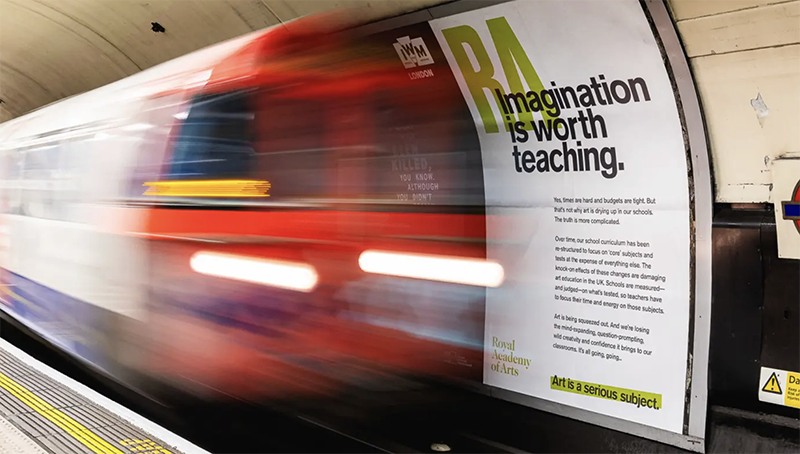
The campaign made me think back to a few years ago when I sat on a careers panel at a local (6 forms of entry) highschool and was horrified only 2 students had taken art as an A-level. I was way too late to the game here. Despite my heart-felt pursuasive arguments, the students were firmly grounded in the idea that if someone isn't good at drawing, there is no place for them in the creative industries. Curriculums don't recognise that creativity is a highly-sought after skill by employers, as highlighted in a report by Canva stating "92% of business leaders expect employees in non-design roles to have design skills and knowledge".
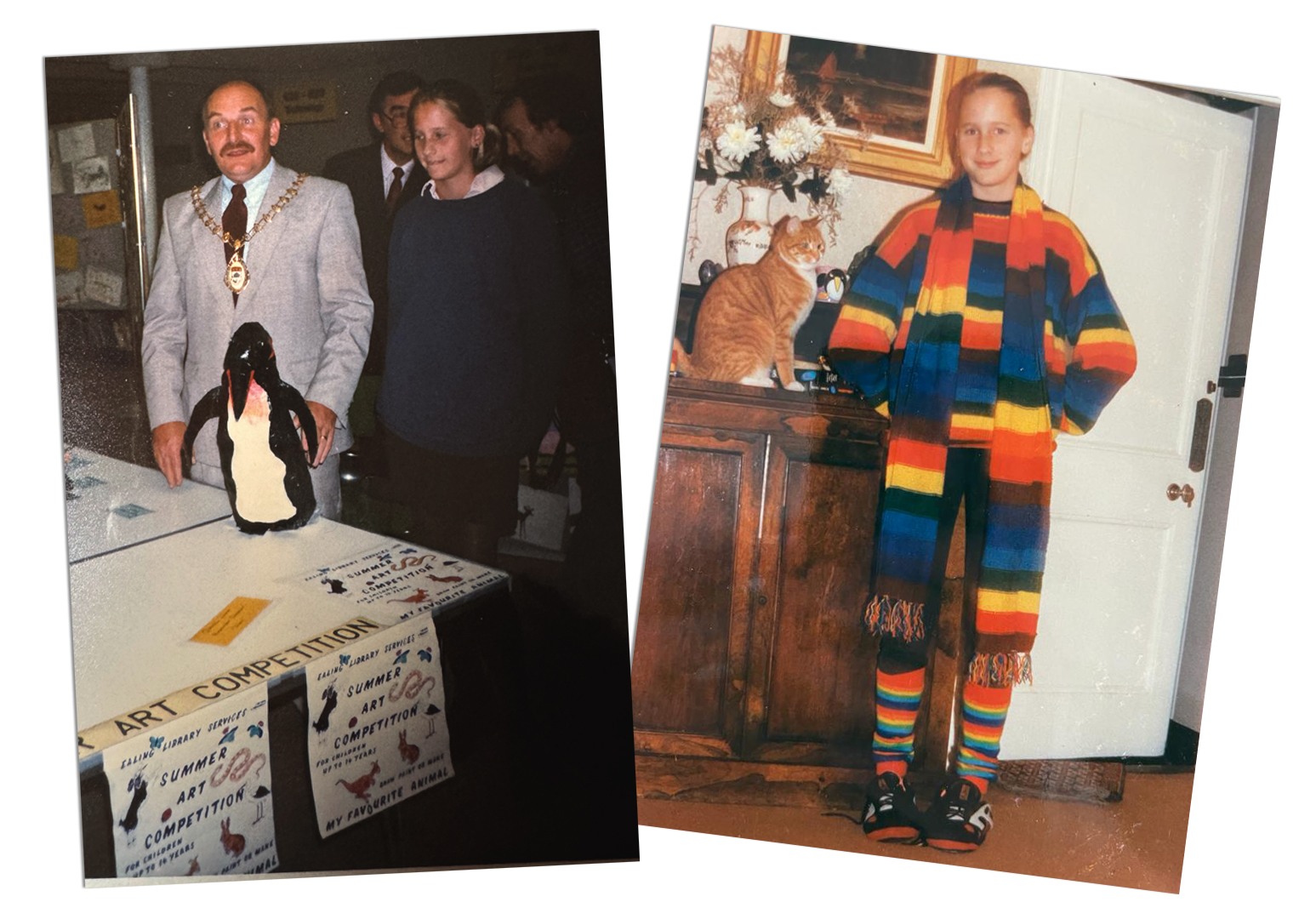
I grew up as an “arty” kid [cut to pics of my competition winning papier-mâché penguin sculpture and an outfit which surely predicts a future creative career]! However, despite praise for my unique creations and competition wins, I always felt the taboo of favouring “soft” subjects at school. These attitudes followed me into adulthood.
I remember bumping into an old classmate in my mid 20’s who unwittingly devalued my career choice with her summary - “Ahh that’s so cute you have a job doing little animations”. This single comment has stuck with me, and embodies a societal negativity towards creative careers, that continues to diminish the importance of the UK’s creative industry.
Sidelining creativity in education is endlessly frustrating to me. I've previously explored the idea that students don't have to be creative to benefit from the Arts: It's clear that a plastic surgeon would thrive from a DT lesson teaching material properties, and excel from the manual dexterity gained in a textiles class. A lawyer's closing statement would better captivate a jury thanks to confidence built through acting in a school production. A grounding in the Arts doesn’t just prepare you for “artistic” careers, it strengthens creative thinking, interpretation and cultural literacy, which are crucial in almost every academic field.
I was reminded of a conversation with a drama teacher friend, who was sharing her mutual frustrations on this topic. She emphasised the total short-sightedness of funding cuts to the Arts by referencing The Arts Council's history. It was established in 1946, just after World War II with the aim of rebuilding national morale and reconnecting communities through the power of creativity. Public access to high-quality art and performance was framed as part of the welfare and social improvement agenda: culture was no longer just for the elite. The Arts, design and innovation were a core focus of rebuilding Britian.
The social and economic reasons for the Arts Council's establisment seem achingly relevent to the uneasy times we are facing in the UK today. Then add in to the mix, the rise of AI which is predicted to significantly impact 60% of current jobs by 2050. Surley these issues warrent a look to the Arts Council's founding principles which prove the economic and cultural merit of championing human dexterity and creativity?
Experts largely believe that many jobs that require a high emotional intelligence and human interaction will not need replacing [by AI], such as mental health professionals, creatives and teachers.
https://edition.cnn.com/2024/05/23/tech/elon-musk-ai-your-job
For me, the Arts were key to my happiness at school. I looked forward to anything that involved creativity and dexterity. Even my 'non-arty' peers valued the break from linear learning these subjects offered.
It's so important we embed the Arts in the heart of education to foster not only skills, but empathy, innovation and a more connected, inspired society. The artist David Shrigley has urged schools to prioritise the arts, suggesting “STEM” - which stands for science, technology, engineering and mathematics - should be changed to “STEAM” to include the arts, which he believes are at the core of a rounded education.
We need to elevate the academic value of nurturing and championing artistic and creative thinking in young people, as a core part of the curriculum. If it's sidelined, where will a new wave of creative minds come from? I’ll do my part at my son’s school but imagine the impact if we all united to make the Arts central and celebrated. Let's use our creativity to start conversations that can spark real change.
Written by Maggie Rogers - Creative Director at Fred & Eric